
Canopy
Proposed Agreement Could Shift More of the Cost of Growth to the Public
Canopy is already well underway in the southern portion—or “Toe”—of Welaunee. But the agreement governing the development is now being rewritten.
The City is considering a major amendment to the Canopy Development Agreement, a long-term agreement that determines development rights, transportation requirements and who is responsible for building portions of the road network needed to support the development.
The proposed changes are complicated, but the central question is simple:
As Canopy and the larger Welaunee area continue to grow, how much of the infrastructure needed to support that growth should developers provide—and how much should taxpayers be expected to pay for?
What’s Happening Now
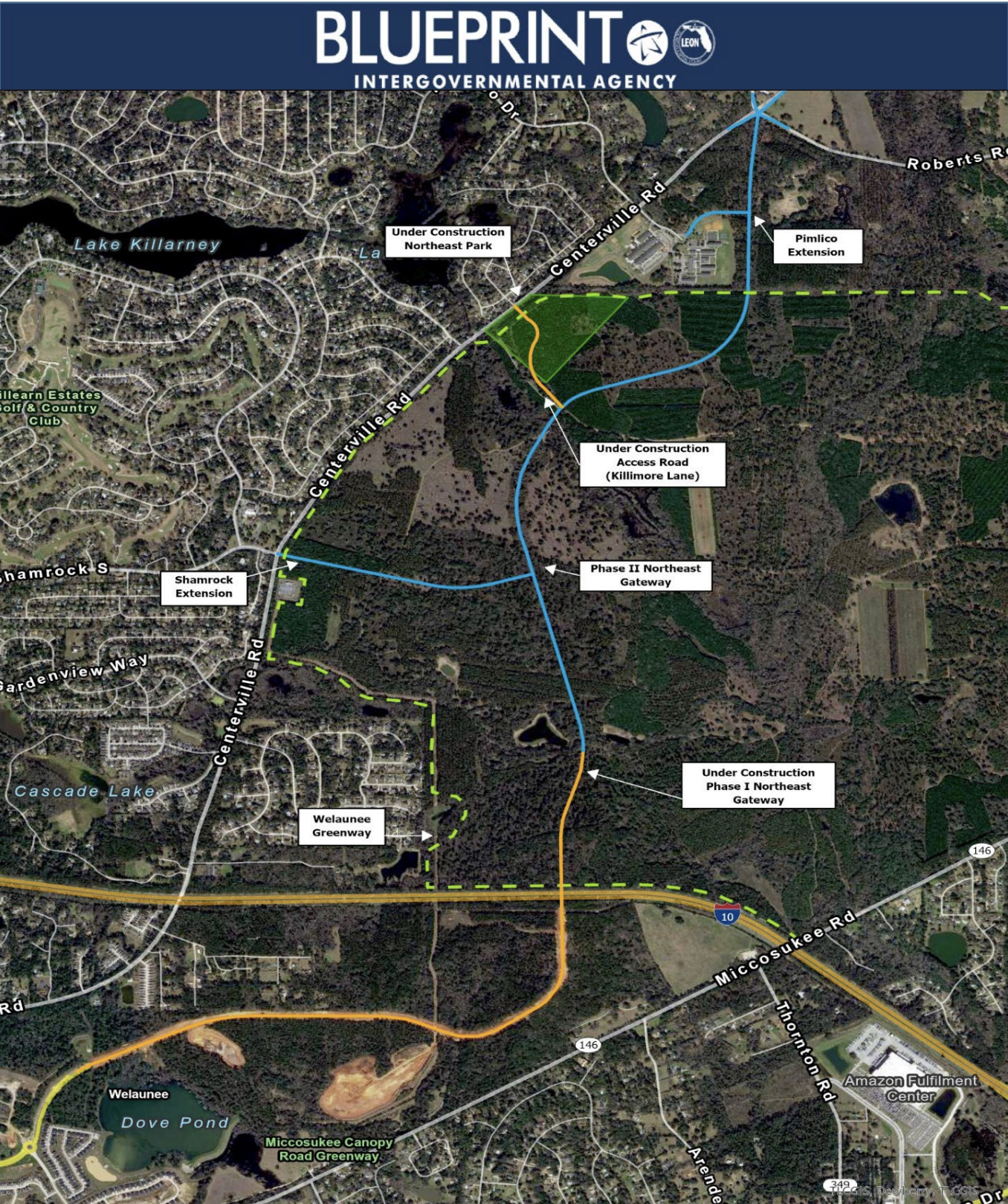
The proposed amendment would replace significant portions of the existing Canopy Development Agreement and establish transportation and development provisions that could remain in effect for 15 years. Among other changes, the agreement addresses construction of Welaunee Boulevard, dedication of right-of-way, transportation improvements, reserved traffic capacity and the development that can occur within Canopy.
Road construction responsibilities would shift to taxpayers.
Some transportation improvements previously assigned to the developer would no longer be constructed by the developer. Instead, right-of-way would be provided to the City, leaving taxpayers responsible for funding construction.
Canopy would get reserved road capacity even if roads become congested.
The agreement would set aside a portion of the road system’s available capacity for Canopy, helping protect its ability to continue building as surrounding traffic increases.
Development could change without amending the agreement.
The mix of land uses, densities and intensities could be shifted within the approved concurrency program without requiring another amendment to the Development Agreement, subject to applicable PUD and transportation requirements.
The agreement would lock in these provisions for 15 years.
That provides long-term certainty for the developer while potentially limiting the ability of future City Commissions to revisit commitments as traffic, development and infrastructure costs change.
Welaunee Boulevard is planned for as many as six lanes through part of Canopy.
The agreement provides for six lanes between Fleischmann Road and Crestview Avenue, raising questions about the amount of future traffic and development this publicly funded infrastructure is being designed to accommodate.
Take Action
Before approving significant changes to a development agreement that could remain in place for the next 15 years, City Commissioners should clearly understand what the new agreement means for taxpayers—and the public should too. Ask the City Commission to fully account for the financial and transportation impacts of the proposed Canopy Development Agreement before voting to approve it.
Let Commissioners know that before changing the agreement, the public deserves a clear accounting of what the developer is responsible for, what the City is taking responsibility for and what taxpayers could ultimately be expected to pay.
Attend the Meeting in Person
Public comment is an opportunity to put your concerns and questions on the record before the Commission votes. If you choose to comment, each speaker is limited to three minutes.
Date: September 23, 2026
Time: 6 pm
Location: Tallahassee City Hall
300 S. Adams Street
Tallahassee, FL 32301
Bottom Line
The question is whether the proposed agreement fairly divides their cost between the development creating demand for them and the taxpayers being asked to fund them.